India’s agricultural waste represents a substantial resource for the country’s emerging circular economy. With million of tons of crop residue generated annually, the opportunity extends far beyond reducing open-field burning.
Farmlands in India produce an enormous amount of waste consisting mainly of rice straw, wheat straw, sugarcane bagasse, cotton stalks, and other forms of biomass. Some of this waste is disposed of through burning, while some companies and research organizations in India have shown that agricultural waste can be converted into an asset.
The magnitude of the potential is also huge. According to the Government of India report in 2026, the annual production of crop residue in the country was around 600 million tons. Furthermore, India is using about 8.8 million tons of bitumen every year, where 50-60% was imported. Energy can also be produced from the residues of agricultural activities and India’s agricultural residues could produce over 18,000 MW of electricity annually.
Indian Companies Turning Agricultural Waste into Useful Products
The transition from farm waste to industrial feedstock can create new value chains, support rural businesses, reduce dependence on fossil fuels and provide farmers with additional opportunities to monetize crop residues. Several Indian innovators are already converting crop residues into commercially useful materials.
Craste: Crop Waste into Building Materials

Craste converts crop residues gathered from the nearby farms into sustainable building materials, paper, and packaging. This Madhya Pradesh-based company employs its unique technology to convert crop stubbles into engineering boards used for indoor purposes. As per the company’s data, it has turned 80 tons of waste into 100,000 wood-free boards are produced using only crop stubbles without any other material. This is a good example of converting agricultural waste from a waste management issue to a raw material for construction and packaging industry.
PRESPL: Building a Biomass Supply Chain
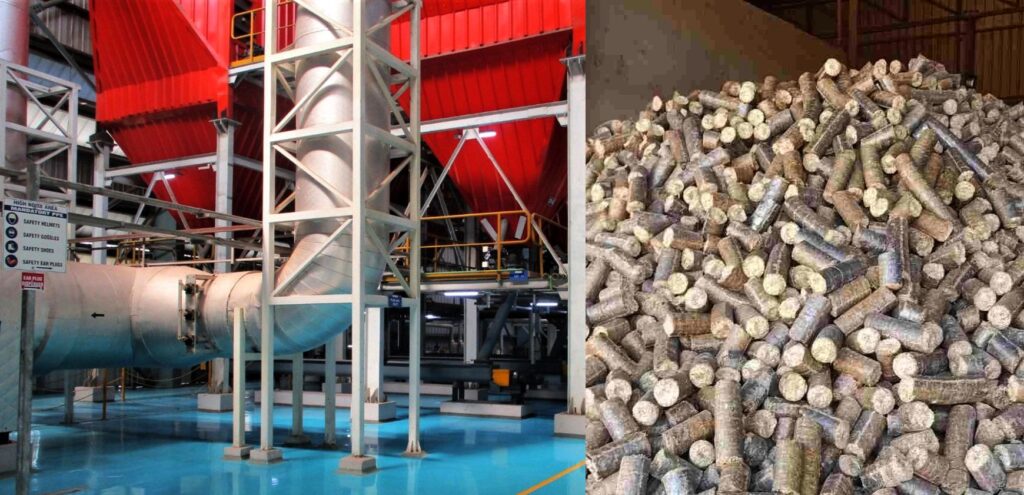
Punjab Renewable Energy Systems Pvt. Ltd. (PRESPL) stocks agricultural biomass and makes it available for use in bioenergy. PRESPL reports that it has aggregated >500,000 tons of biomass over the last eight years by diverting agricultural residue from open stubble burning. Approximately 250,000 tons of CO₂-equivalent emissions have been avoided through its operations. PRESPL’s example highlights an important part of the waste-to-value ecosystem: conversion technology is only useful when reliable supplychains exist to collect, transport and process agricultural residue.
Greenjoules: Agricultural Waste into 2G Biofuels
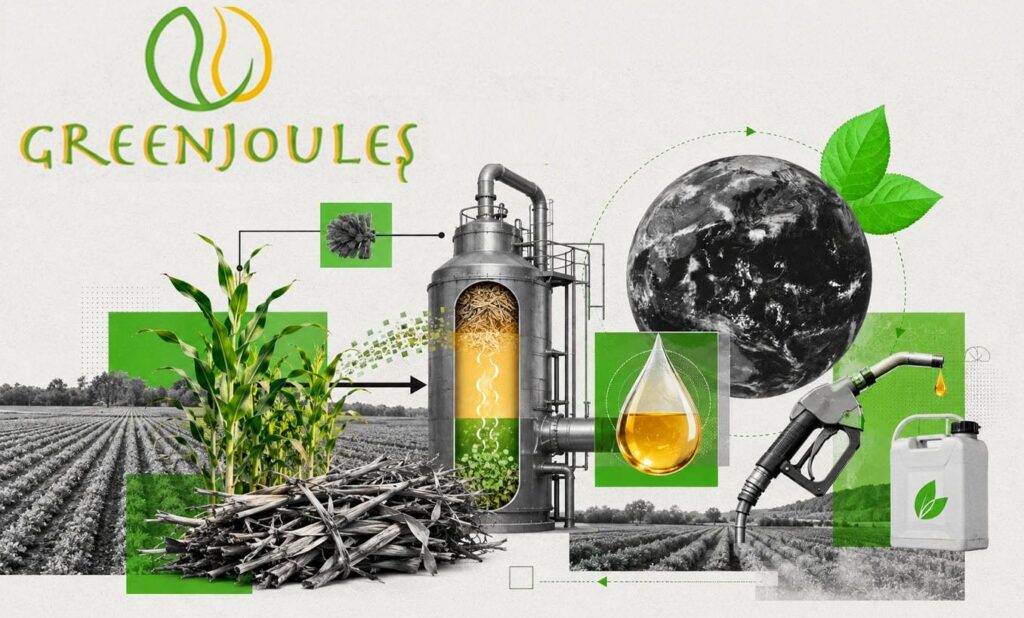
Pune-based Greenjoules converts agricultural and agro-industrial waste into second-generation renewable fuels (2G biofuels) through thermochemical processing. Its feedstocks include rice husk, sugarcane press mud and paddy straw. The company produces renewable diesel and bio-naphtha as drop-in alternatives to fossil fuels. Its technology has also received support from India’s Technology Development Board for commercial-scale production. The Indian government’s technology portal identifies Greenjoules’ 2G biofuel technology as TRL-9, with the fuel tested and approved by institutions such as IIT Madras, ARAI and the Indian Institute of Petroleum.
CSIR Converts Paddy Straw to Bio-Bitumen
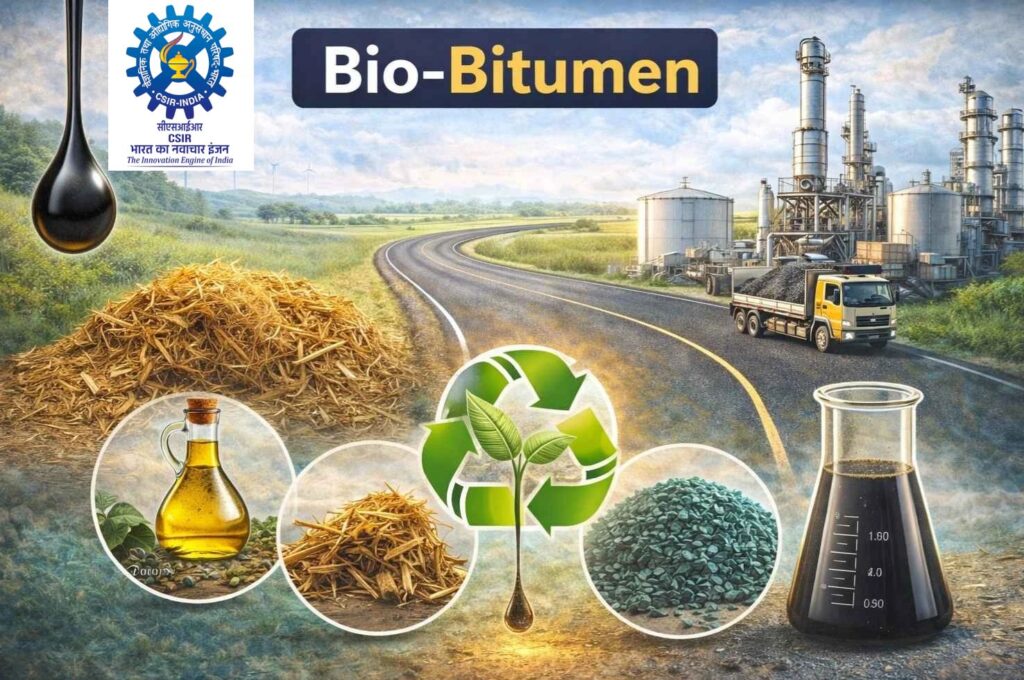
One of the most prominent innovations has been made in India’s public research sector. CSIR-Central Road Research Institute (CSIR-CRRI) and CSIR-Indian Institute of Petroleum (CSIR-IIP) have created an innovation to use agriculture waste such as rice straw to create bio-bitumen using pyrolysis. In this process, agricultural waste is transformed into bio-oil and upgraded to bio-binder for road building. Government tests have shown that bio-bitumen is able to replace up to 30% of regular bitumen in the road construction without affecting pavement characteristics.
The technology has already gone beyond the development phase and started being commercialized. In January 2026, the technology was licensed to 14 companies for production. There is huge economic potential. According to a government report, using a 15% blend of bio-bitumen can lead to savings of about ₹4,000 crore annually in foreign exchange, depending on the availability of raw materials and other factors.
What Is the Value of Agricultural-Waste Conversion?
There is currently no single reliable national figure for the total monetary value of agricultural waste already converted into products. Different residues enter different markets—energy, packaging, construction materials, biofuels, compost, biogas and biochar—and companies report their results using different measurements. These individual examples demonstrate the emerging economic value from the agriculture waste economy of India:
- Craste reports 80 tons of waste converted into 100,000 products
- PRESPL reports 500,000+ tons of biomass aggregated
- Greenjoules scales commercial production of 2G biofuels from agricultural waste
- CSIR’s bio-bitumen technology is already technology transferred to 14 industrial companies, thus developing a new commercial route for agricultural waste
The Road Ahead
The biggest challenge is no longer simply identifying uses for agricultural waste. It is building efficient systems for collection, transportation, storage, preprocessing and conversion. Agricultural residue is seasonal, geographically dispersed and often expensive to transport because of its low bulk density. Successful businesses therefore need strong links between farmers, aggregators, logistics providers, processing facilities and end-product markets. As these supply chains mature, agricultural residues could become feedstocks for renewable fuels, biodegradable packaging, engineered materials, biochar, chemicals and road-construction products.