
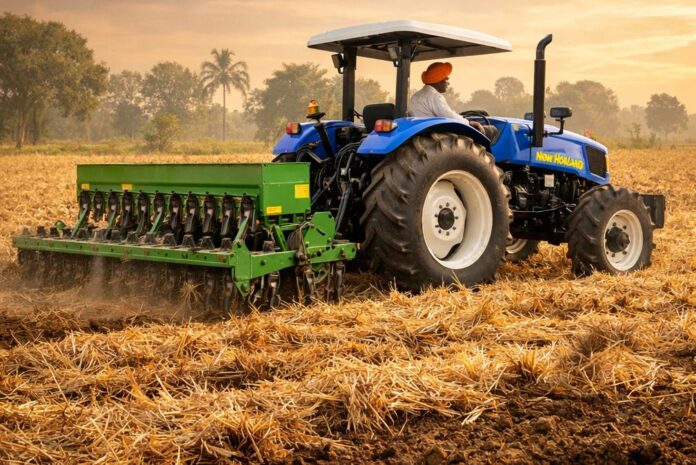
Farming is built upon the soil. If the soil is not healthy, then crops will not grow well. Yields fall. Costs rise. Profits shrink.
Soil problems are big trouble for a lot of Indian farmers today. Soil fertility has been degraded by continuous cropping, heavy usage of chemical fertilizers and excessive tillage. Climate change is adding more pressure, since erratic precipitation and heat waves shatter the soil structure and remove moisture.
So, preserving soil’s health is key to the future of Indian agriculture. One of the most practical solutions is sustainable tillage. It allows farmers to produce higher-quality crops while nurturing land.
What Is Soil Health?
Soil health is the ability of soil to function as a living system. Healthy soil supports plant growth; stores water, recycles nutrients; and supports microbes and earthworms. Good soil has:
- Balanced nutrients
- Adequate moisture
- Good soil structure
- Active microorganisms
- Adequate organic matter
When soil loses such attributes, crops fail. Farmers subsequently invest more in fertilizers and irrigation. In India, 5.3 billion tons of topsoil are lost every year due to water and wind erosion. Soil organic carbon levels have declined from ~1% to ~0.3% in many regions over the decades. 64% of tested soil samples are low in nitrogen, and 48.5% are low in organic carbon.
What Is Sustainable Tillage?
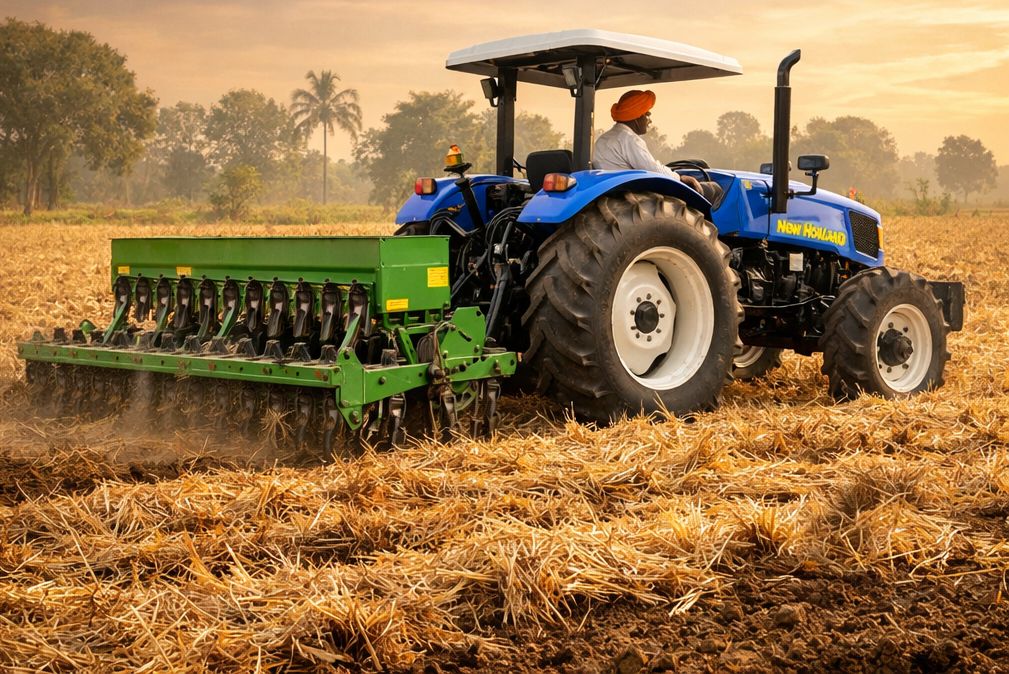
Conventional tillage usually involves multiple ploughing to prepare soil for planting. However, excessive tillage can destroy soil structure. Key tenet of sustainable tillage is minimal soil disturbance, which shields soil from erosion and moisture loss.
There are three main types of tillage:
- Conventional tillage – Intensive leasing
- Adoption of reduced tillage – Minimum soil disturbance
- Zero tillage (no-till) — Seeds are sown without turning the soil for cultivation
Out of these, reduced and zero tillage is more sustainable for soil health in the long run.
Why Soil Health Is Declining in India
There is a problem of soil degradation in many parts of India. The main reasons include:
- Overuse of chemical fertilizers
- Burning of crop residue
- Intensive monocropping
- Excessive tillage
- Water mismanagement
Such practices lower soil organic carbon. They also kill beneficial microbes. It means that productivity is slow. Farmers are therefore relying on external inputs more. This increases production costs.
Benefits of Sustainable Tillage
Gradually, sustainable tillage enhances soil quality. The results may not show overnight, but they are long-lasting. Here are the major benefits:
- Improves soil structure
- Reduces soil erosion
- Conserves moisture
- Increases organic matter
- Supports beneficial microbes
- Reduces fuel and labour costs
Less soil disturbance is beneficial for the natural life of soils. Earthworms increase and soil becomes more fertile naturally.
Modern Solutions Supporting Sustainable Tillage
Today, technology plays a major role in soil conservation. Modern farm machinery can minimize the harm done to the soil. They provide superior control and precision.
Tractors with advanced hydraulic systems can help farmers run their implements seamlessly. Well-designed machines minimize unnecessary soil compaction. Many farmers prefer machines to be compatible with conservation farming practices. These features enable farmers to perform efficient reduced tillage operations.
Another innovation is zero-till seed drills, which enables direct sowing without tillage. This saves time and preserves soil moisture. Laser land levelling is another emerging practice. It ensures uniform water distribution and avoids waterlogging and soil erosion.
Role of Organic Matter and Crop Residue
Soil needs organic matter. It improves structure and fertility. Farmers can instead of burning crop residue:
- Use mulching
- Incorporate residue into soil
- Practice crop rotation
- Grow cover crops
Mulching shields soil from direct sunlight. It reduces evaporation and controls weeds. Crop rotation improves nutrient balance. Growing pulses after cereals, for example, helps naturally fix nitrogen.
Government Support and Awareness
The Government of India has been promoting soil health through various schemes. The Soil Health Card Scheme tests key soil parameters and provides fertilizer recommendations to farmers. Over 25 crore Soil Health Cards have been distributed to farmers across India.
There is also a growing awareness of natural farming and organic practices. Zero-budget natural farming is promoted in many states. Training programs to train farmers in sustainable agriculture are regularly organized by agricultural universities and Krishi Vigyan Kendras.
Challenges in Adoption
However, based on the advantages it offers, some farmers are reluctant to embrace sustainable tillage. Common concerns include:
- Fear of lower initial yield
- Lack of awareness
- Cost of new equipment
- Traditional mindset
But over time, the benefits exceed the challenges. Farmers who start implementing conservation practices often have healthier soil in a few seasons.
The Way Forward
Soil health is as much an environmental concern as it is an economic issue. Soil in good health decreases reliance on chemical inputs. It lowers production costs. It improves crop quality.
Farmers need to go from ‘maximum tillage’ to ‘smart tillage’. They need to understand soil as a living resource. Not just a medium for crops. Using modern machinery wisely. Retaining crop residue. Practicing crop rotation. Reducing chemical loads. All these steps can restore the strength of the soil. Conservation is NOT a fad*. That is the future of Indian agriculture.


