
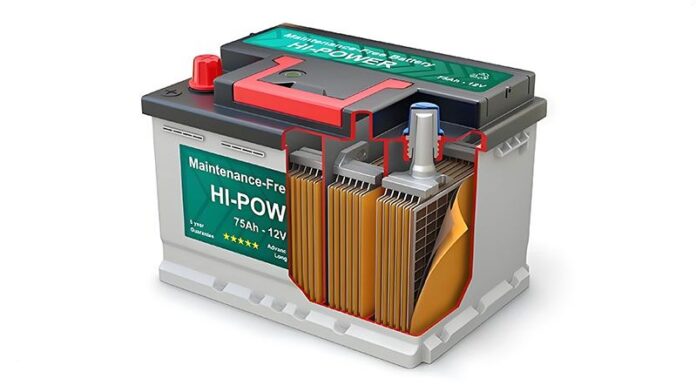
If you’ve been researching n solar batteries for more than ten minutes, you’ve probably hit a wall. There are dozens of options, confusing spec sheets, and differing opinions on every forum. But when you strip it all down, most solar power battery decisions in India and globally come down to two chemistries: lithium iron phosphate (LiFePO4) and lead-acid.
Both store energy and work with solar power systems. However, they are fundamentally different in how they perform, how long they last, and what they actually cost over time. This article breaks it down clearly, without any jargon overload, no brand pushing, just the real difference between these two battery types so you can make a smarter decision for your home or off-grid setup.
What Is a Lead-Acid Battery?
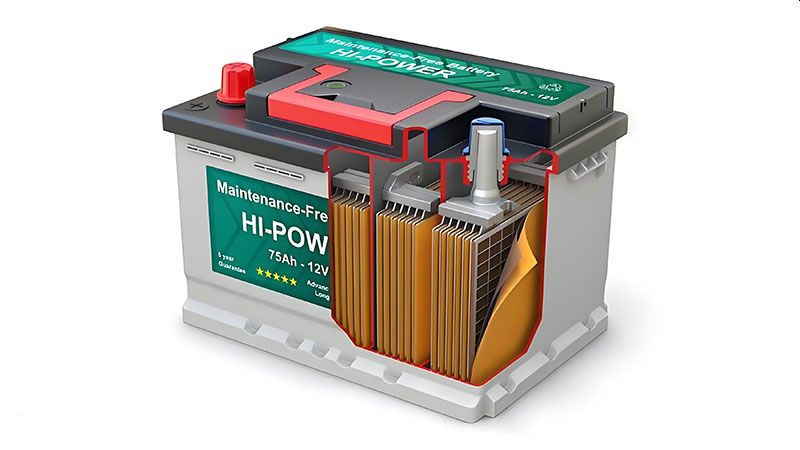
Lead-acid is the oldest rechargeable battery technology in widespread use. It’s been around since the 1850s and it still powers most vehicles and many off-grid solar installations across rural India. Lead-acid batteries are widely available, easy to recycle, and inexpensive to purchase initially. For a long time, they were the only practical choice for off-grid solar storage. That’s changed significantly. There are two main variants used in solar systems:
- Flooded Lead-Acid (FLA): The traditional version with liquid electrolyte. It requires regular distilled water top-ups and is sensitive to temperature and tilt. Cheap upfront, but high maintenance.
- Sealed Lead-Acid (SLA) / VRLA: Includes AGM (Absorbent Glass Mat) and Gel variants. Maintenance-free, but still carries the core limitations of lead-acid chemistry.
What Is a LiFePO4 Battery?
LiFePO4 (lithium iron phosphate) is a new type of lithium-ion battery. Unlike other lithium chemistries such as NMC or NCA used in electric vehicles, LiFePO4 is specifically known for its thermal stability, long cycle life, and safety features. It does not overheat or catch fire under normal operating conditions, which makes it well-suited for residential and commercial solar applications. It is costlier upfront as compared to lead-acid, but that’s where the straightforward comparison ends.
Why Your Solar Inverter and Battery Choices Are Connected
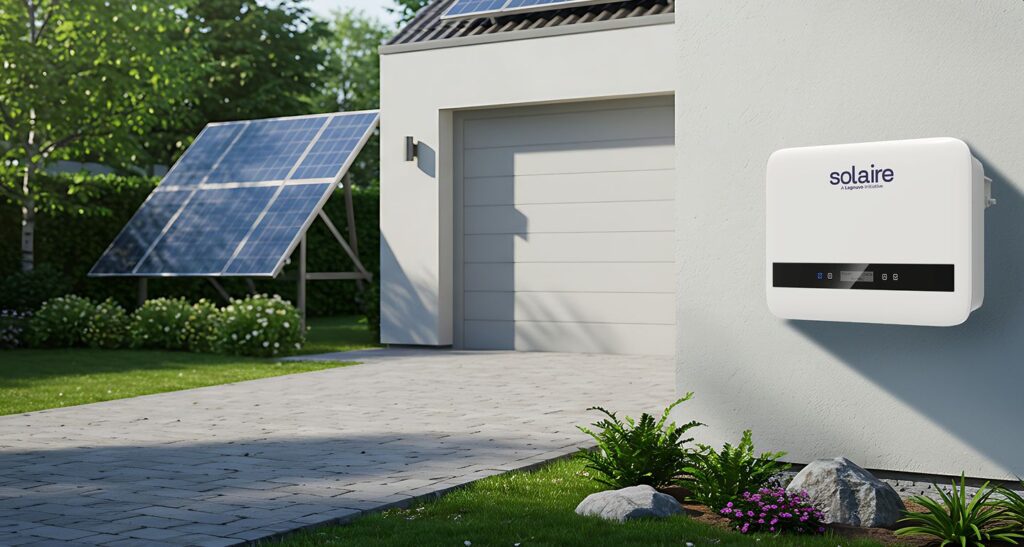
Before getting into the battery comparison, it’s worth pointing out that your battery and your solar inverter need to be compatible. This is especially true in India, where a growing number of homeowners and businesses are moving toward hybrid and on-grid solar setups.
A smart solar inverter with built-in battery management communication, typically via CAN or RS485 protocols, can actively monitor your battery’s state of charge, control charge rates, and protect against overcharge or deep discharge. LiFePO4 batteries are designed to take full advantage of this kind of intelligent inverter communication. Lead-acid systems, by contrast, offer limited two-way communication and rely heavily on external charge controllers.
If you’re evaluating solar inverters in India for a new installation or an upgrade, it’s worth checking whether your chosen inverter is tested and certified to work with LiFePO4 batteries. Brands like Solaire build their inverters specifically with the latest battery integration in mind.
Key differences – LiFePO4 batteries vs lead-acid batteries
Cycle life: this is the big one
Battery Cycle life refers to how many charge-discharge cycles a battery can complete before its capacity degrades significantly, usually defined as dropping below 80% of its original capacity.
- Lead-acid: Typically 400-500 cycles at 50% depth of discharge (DoD). Some premium AGM variants push to 800 cycles under ideal conditions.
- LiFePO4: Commonly rated at 3,000-6,000 cycles at 80 to 90% DoD.
That’s an enormous difference. So for a typical household, a lead-acid battery bank might last just 2-3 years under real-world usage, while a LiFePO4 system at the same daily usage rate could last 10-12 years. This is the single most important factor when calculating the true cost of ownership, not the sticker price.
Usable capacity
Both battery types are rated by nominal capacity in kWh or Ah, but how much of that capacity you can actually use differs significantly:
- Lead-acid: Safe usable capacity is 40-50% of rated capacity. Going deeper degrades the battery faster.
- LiFePO4: Usable capacity is 80-90% of rated capacity without significant degradation.
So a 10 kWh lead-acid bank gives you roughly 4 to 5 kWh of usable energy, while a 10 kWh LiFePO4 system gives you 8 to 9 kWh. You’re essentially buying twice the capacity!
Charging Speed and Efficiency
Lead-acid batteries require a controlled, slow charging process, particularly during the absorption phase. Fast charging damages them. They also have a round-trip efficiency of around 70 to 80%, meaning a portion of the energy you put in is lost as heat.
LiFePO4 batteries charge faster, tolerate partial state-of-charge cycling well, and have a round-trip efficiency of 95 to 98%. In a solar power system where every unit of energy matters, especially during cloudy days or load-shedding, that efficiency gap compounds over time. This efficiency advantage is one reason why more solar inverter manufacturers in India are now building their hybrid and on-grid inverter platforms around LiFePO4 compatibility as the default.
Temperature Performance
Climatic conditions varies dramatically in India, right from the heat of the Deccan Plateau to the cold nights of Himachal Pradesh. So battery performance under temperature stress matters.
- Lead-acid loses capacity sharply in colder temperatures and degrades faster in heat. Batteries operated above 35°C age significantly faster.
- LiFePO4 performs well across a broader temperature range. Most modern LiFePO4 batteries are designed to charge between 0 to 55°C and discharge in temperatures as low as -20°C, making them viable across most Indian climates.
Maintenance Requirements
Lead-acid batteries, especially flooded types, require periodic maintenance: checking electrolyte levels, cleaning terminals, equalization charges, and ensuring proper ventilation because they off-gas hydrogen during charging.
LiFePO4 batteries are completely sealed, maintenance-free, and typically come with built-in Battery Management Systems (BMS) that handle balancing, overcharge protection, temperature monitoring, and short-circuit protection automatically. For rooftop homeowners, small businesses, or remote off-grid installations, the maintenance savings alone are significant.
Physical Footprint and Weight
For the same usable energy capacity, lead-acid batteries are significantly heavier and bulkier. If you’re installing on a rooftop, in a server room, or in a mobile setup, the weight difference is a real engineering constraint, not just a convenience factor. LiFePO4 systems consistently offer more usable energy per kilogram and per square foot of floor space compared to equivalent lead-acid banks.
Real Cost Calculation
Most buyers miscalculate by just looking at the per-kWh price of lead-acid versus LiFePO4 price and assume lead-acid is cheaper. But the math doesn’t hold up. The right way to compare battery costs is total cost of ownership over the system’s expected lifetime:
- Replacement frequency: Lead-acid batteries under daily cycling typically need replacement every 2 to 3 years. A quality LiFePO4 system can run for a decade without replacement.
- Effective usable capacity: Because you can only safely use 50% of a lead-acid bank’s rated capacity, you need to buy significantly more battery capacity to meet the same power
- Efficiency losses: At 70 to 80% round-trip efficiency, lead-acid wastes a measurable portion of the solar energy you generate. That energy loss translates into a real cost over years of operation.
- Maintenance costs: Flooded lead-acid requires time, materials, and sometimes professional servicing. Those costs add up.
When all these factors are included in the calculation, LiFePO4 often comes out ahead over a 10-year horizon, even if the upfront purchase price is higher. The exact margin depends on your usage pattern, local pricing, and system design, so it’s worth running your own numbers or speaking with a qualified installer before deciding.
So Does Lead-Acid Still Make Sense?
The solar battery market has matured. LiFePO4 is no longer a premium luxury. It’s becoming the practical standard for anyone who wants a storage system that performs reliably, lasts a decade, and doesn’t require regular intervention.
However, lead-acid is not obsolete. There are genuine use cases where it remains a reasonable choice:
- Very low-budget, short-term installations where capital expenditure must be minimal.
- Seasonal use setups such as holiday homes or agricultural pump backups that run only a few months per year.
- Locations with easy battery access for maintenance and replacement.
- Low cycle frequency applications where the battery is rarely discharged deeply.
If your priority is the lowest possible upfront cost and your system is simple and low-demand, lead-acid may still be justifiable. But for any system expecting daily cycling and 5+ years of use, LiFePO4 is the more rational investment.
What to Check on the Spec Sheet Before You Buy
Whether you’re evaluating lead-acid or LiFePO4, here are the numbers that matter most:
- Cycle life at rated DoD: Always check the DoD at which the cycle rating is tested
- Usable capacity: Not nominal capacity
- Round-trip efficiency: Impacts your effective solar yield
- Operating temperature range: Critical for Indian climates
- Warranty period: A 10-year warranty on a battery signals confidence in longevity
- BMS protection features: Overcharge, over-discharge, short circuit, and temperature protection
- Communication interfaces: For smart monitoring, look for RS485 or CAN bus compatibility with your solar inverter
Author bio: This is a guest post submitted by Solaire, which is a solar inverter and energy storage manufacturer based in India.


